If you have been recommended for surgery and you are looking for a minimally invasive alternative, it is normal to want to understand clearly what changes, what benefits it can offer, and how recovery will be. Especially when it comes to complex procedures where the precision of the approach makes a difference.
At the Institute of Robotic Surgery of The Panama Clinic, we perform robotic surgery with advanced technology, including the da Vinci robot, to assist the surgical team in selected procedures. If you would like to confirm whether you are a candidate and what option is best for your case, request an assessment with our team.
What is robotic surgery and when is it recommended
Robotic surgery is a surgical technique assisted by a robot in which the surgeon controls specialized instruments from a console. The system translates the surgeon’s movements with great stability and allows for operations through small incisions, providing an enlarged view of the surgical field.
It does not replace the surgeon nor make decisions on its own. It is a tool that, in indicated cases, can provide advantages over open surgery or even some laparoscopies, depending on the condition, anatomy, and the goal of the procedure.
You have been recommended for surgery and want to learn about minimally invasive options.
You are looking for an alternative with potential for less postoperative pain and faster recovery.
You need a procedure that requires high precision in narrow anatomical spaces.
You are concerned about the length of hospitalization or returning to activities.
What benefits can be expected
The benefits depend on the type of surgery and the clinical situation. In general terms, robotic surgery can be associated with:
Small incisions and better tissue management.
Greater precision in delicate maneuvers, especially in the pelvis and abdomen.
Better visualization with 3D vision and high definition depending on the system used.
In many cases, less bleeding, less pain, and a quicker recovery.
The final indication is confirmed in consultation, reviewing diagnosis, images, history, and surgical objectives.
da Vinci technology at The Panama Clinic
In our institute, we work with the da Vinci Xi system, a platform designed for robot-assisted surgery. Its purpose is to support the surgeon with fine control of instruments and detailed visualization of the surgical field.
System components
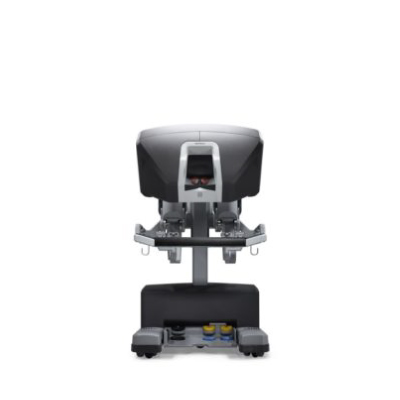
Console: this is where the surgeon sits to control the instruments with precise and stable movements.
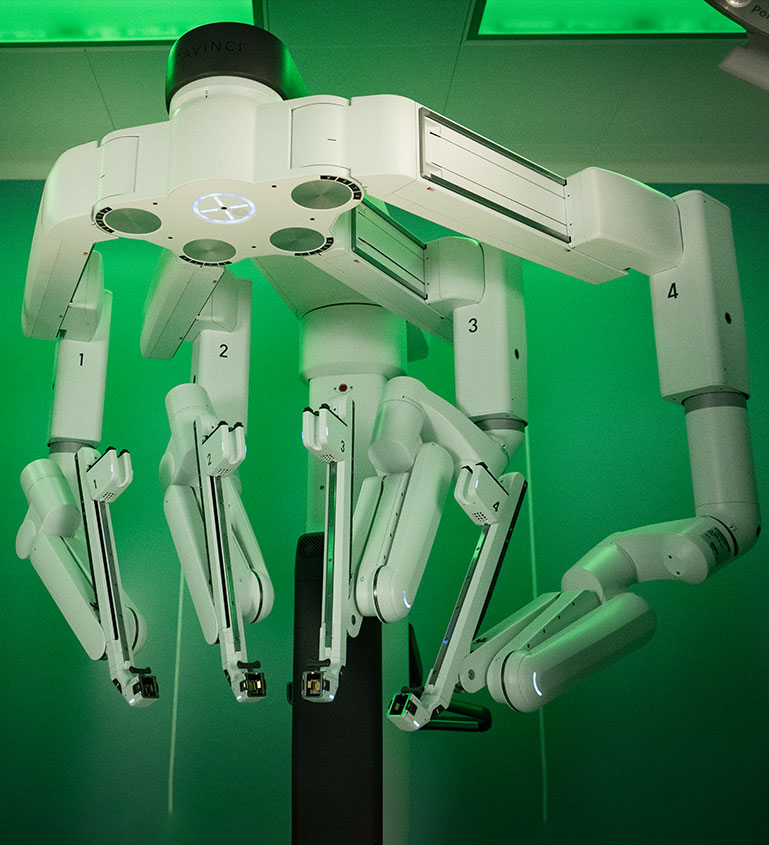
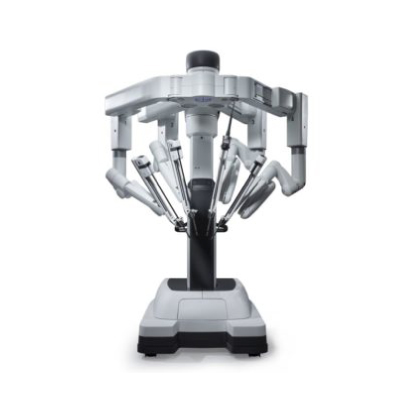
Patient cart: located next to the surgical table and holds the arms that manipulate the instruments.
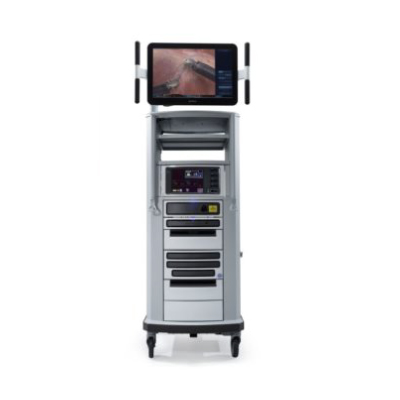
Vision tower: integrates image processing and supporting equipment, providing high definition and 3D vision in procedures that require it.
The most important thing for the patient
Technology is a means, not an end. What matters is having a trained surgical team, an appropriate indication, and a safe protocol before, during, and after the procedure. If you are interested in confirming whether the robotic approach is appropriate for your case, you can schedule a pre-surgical evaluation.
Specialties and procedures where robotic surgery is used
Robotic surgery can be used in various areas. The decision depends on the diagnosis, complexity, history, findings in studies, and the criteria of the treatment team. In our institute, it is used as support in selected procedures, including:
Urology
Prostate surgery in indicated cases, as part of the management of prostate cancer.
Kidney surgery, including scenarios of kidney cancer where tissue preservation is evaluated based on the case.
Selected reconstructive urological procedures.
General surgery and coloproctology
Colorectal procedures, including oncological cases of colon and rectal cancer in selected patients.
Share your studies and history and request guidance to define the next step.
How the care process works and what to expect
Initial evaluation
The first stage is to confirm whether the robotic approach provides real advantages in your case. Diagnosis, imaging studies, history, previous surgeries, medications, and treatment goals are reviewed. If necessary, complementary tests are requested to safely plan the procedure.
Preoperative plan
Before surgery, instructions regarding fasting, medication adjustment, anesthetic evaluation, and specific preparation based on the type of procedure are coordinated. Risks, alternatives, and expected care during recovery are also explained.
Surgery and recovery
During the procedure, the surgeon controls the system from the console, and the team works collaboratively in the operating room with the patient cart and the vision tower. After surgery, the pain management, mobilization, and diet plans are adjusted according to your progress and the type of intervention.
Recovery varies based on complexity and each patient’s condition. In many cases, since it is minimally invasive, the hospital stay may be shorter, and the return to activities is planned gradually, with scheduled follow-ups.
Da Vinci XI
Da Vinci XI
The most advanced platform for minimally invasive surgery developed by Intuitive Surgical and available at The Panama Clinic.
It is a robotic surgical assistant that mimics the surgeon's movements while the doctor operates immersed in the virtual world presented by the console.
It has mechanical wrists that bend and rotate to imitate human wrist movements, allowing the surgeon to perform small and precise movements within the patient's body through incisions of less than 1 cm.
It features a high-definition 3D vision system, special instruments, and software that enables the surgeon to operate with enhanced precision and a close-up view.
Its innovative and precise technology endows this robotic system with adaptability and versatility for different specialties.
Advantages
Software designed to eliminate human hand tremor.
Robot arms can access any part of the patient's anatomy.
Robot arms can access any part of the patient's anatomy.
Minimally invasive, incisions of less than 1 cm, minimal scarring.
Optimal oncological and functional results
In prostate surgery, lower risk of impotence and incontinence
Lower risk of infection and blood loss
Reduction in complications and shorter recovery time
Significant decrease in pain and less need for pain management medications
An ergonomic system consisting of a 3D viewer and controls through which the surgeon can move the four arms of the da Vinci Xi robotic system.
Patient Cart
Composed of four robotic arms controlled from the console and operated by the surgeon. Each arm enters the patient through 8 mm to 12 mm incisions.
Vision Tower
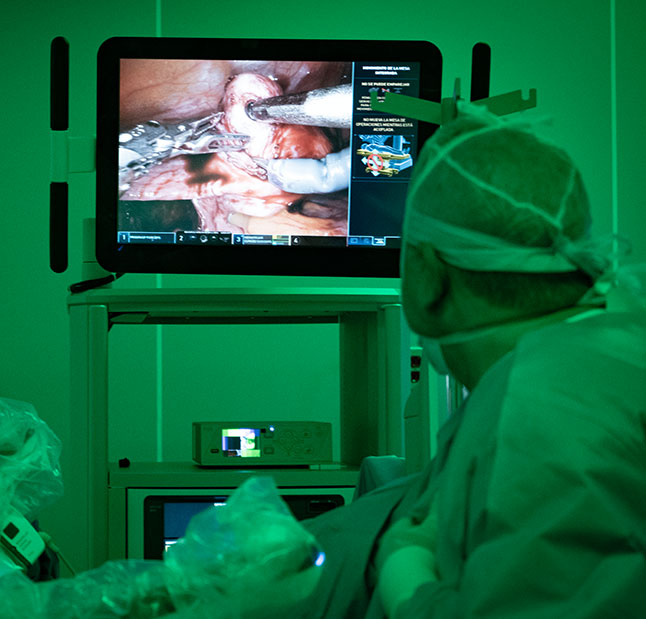
It is an auxiliary screen where the image is projected so the operating room staff can observe the surgery.
Our Surgeons The Panama Clinic
The patient should always consult with their doctor about all treatment options, risks, and benefits.
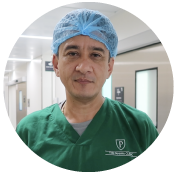
Dr Ángel Alvarado
Head of Urology at The Panama Clinic, Urologic Surgeon
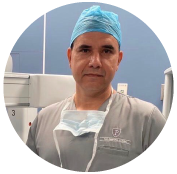
Dr. Roger Vega
General Surgeon and Coloproctologist
Dr. Leticia Ruiz
Urologic Surgeon Specialized in Robot-Assisted Procedures
Dr. Alejandro Manduley
Physician, Urologic Surgeon
Dr. Julio Godoy
Specialist in Gynecologic Oncology, Certified in Gynecologic Robotic Surgery
Advantages of robotic surgery for the surgeon
Offers a 3D vision, in HD format with a 10 times magnification of the surgical field, undoubtedly superior to the laparoscopic technique.
Reduction of operating room preparation time for the next intervention.
All this translates into a great benefit as it allows for careful treatment of the patient's tissues.
More than 70 instruments allow the surgeon greater precision, range of movement, articulation, and rotation (Robot arm rotation of 540 degrees and articulation of 180 degrees)
Eliminates hand tremors of the surgeon and prevents involuntary movements
The robot's instruments are so small that they can reach more distant and difficult-to-access areas of the body
Interact with other technologies typically found in operating rooms around the world
Better ergonomics and comfort for the surgeon.
Ability to perform multi-quadrant surgery and even operate on multiple organs located in different anatomical quadrants without moving the patient or the robot
No. The da Vinci robot does not make decisions or perform movements on its own. The surgeon controls the system from the console and the team supervises every stage of the procedure.
Does robotic surgery hurt?
There are postoperative discomforts, as with any surgery, but since it is a minimally invasive approach with small incisions, many people report less pain compared to open surgery. Pain management is planned according to the procedure and your response.
How long does recovery take?
It depends on the type of surgery, your health status, and the complexity. During the consultation, an estimated range of recovery, rest times, and return to activities is provided. The goal is safe recovery, not rushed.
What type of vision does the system use?
The system provides detailed visualization of the surgical field. In the da Vinci Xi, 3D vision and high definition are used to support the identification of structures and the precision of movements.
Are all patients candidates?
Not always. The indication depends on the diagnosis, anatomy, previous surgeries, comorbidities, and goals of the procedure. A medical evaluation is the best way to confirm whether the robotic approach offers advantages in your case.
Seguridad y consideraciones honestas
Like all surgeries, robotic surgery has potential risks: bleeding, infection, anesthetic complications, injury to nearby structures, or the need to convert to another technique if safety requires it. The probability and type of risk vary according to the procedure and your condition.
Therefore, the indication is based on medical criteria, not just on technological availability. In consultation, we explain expected benefits, limitations of the approach, and possible alternatives so that you can make an informed decision.
Investment and procedure quote
The cost of the procedure can vary depending on the type of surgery, complexity, surgical time, supplies, days of hospitalization, fees, and specific requirements of the case. To give you realistic guidance, it is ideal to evaluate your diagnosis and review your studies.
If you want a personalized quote, you can consult our team and we will tell you what information we need to estimate the surgical plan.
Schedule your evaluation at the Robotic Surgery Institute
If you are considering robotic surgery and want a clear opinion about the procedure at the Robotic Surgery Institute of The Panama Clinic, we guide you with a plan based on your diagnosis.